Column · 15 October 2026
4 min read · 1 read
When Praying in the Middle of the Road Becomes Everyone Else's Fault
Kneeling in the middle of the road at night for four minutes, while other drivers narrowly swerved around her: Samia Malik's death in Adelaide is a tragedy. But the way it is being told, and judged, says a great deal about our collective refusal to name responsibility.
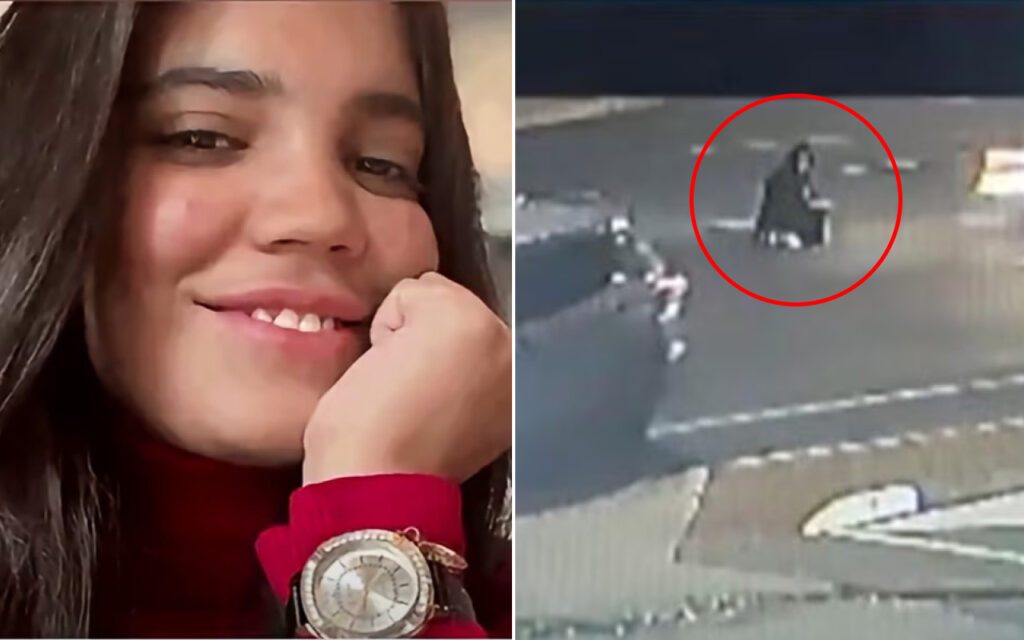
In Adelaide, Australia, on May 6, 2025, at around 11 p.m., on North East Road in Hillcrest, Samia Malik, a 20-year-old Pakistani student, knelt down in the middle of the roadway. Surveillance cameras and witnesses confirm it: she stayed there for about four minutes, her hands in what the judge described as a "praying motion." Several motorists narrowly avoided her. Ashton Jacob Friend, then 19, was driving home after visiting his girlfriend. He was travelling below the speed limit, with no alcohol or drugs in his system. He struck Malik, thought he had hit a kangaroo (his car was barely damaged), kept driving, and only realized he had killed a person when he saw the news the next day. He pleaded guilty to causing death by careless use of a vehicle and to leaving the scene after causing death.
The verdict: one year, three months and twenty-nine days in prison (with an eight-month non-parole period), fully suspended on a two-year good behaviour bond and a token fine, plus a ten-year driving ban. The judge cited his young age, his remorse, his prospects for rehabilitation and the "unusual" circumstances. No explanation was ever given to the court as to why Malik was in the roadway at that hour.
Here is the absurdity, plain and simple. A young woman decides, in the middle of the night, to settle in the middle of a road where cars are driving. She stays there for several minutes, visible, motionless, in a posture suggesting prayer. Drivers swerve around her. A young man, distracted for a moment (a glance in the rearview mirror, roughly 2.25 seconds of possible reaction time according to the reconstruction), hits her, believes it was an animal — a common occurrence in Australia — and doesn't stop. The result: he is formally sentenced to prison (even if suspended) and loses his licence for a decade. She is dead. He will carry this for the rest of his life.
There's no need to invent a "radical Islamist" to see the absurdity. Whether it was deliberate prayer, a moment of distress or something else, the fact remains: she placed herself, voluntarily and for a sustained period, somewhere no one has any right to be, least of all at night, and where the slightest error or distraction by a driver becomes fatal. Roads are not makeshift mosques. Other road users are not required to guess, in a split second, that a body kneeling in the middle of the asphalt is a human being at prayer rather than an obstacle or an animal. To believe one can impose one's ritual in the middle of traffic, and that justice must then mainly punish the person who failed to avoid it, is to turn responsibility on its head.
This kind of case reveals the gap between reality and the dominant narrative. The emphasis falls on the "promising young student," on the family's grief (which is legitimate), on the driver's remorse, while the behaviour that created the danger is downplayed or ignored. The media and part of public opinion treat the event as if the victim had no part in her own death, when she occupied the roadway for several minutes. In the West, we have internalized the idea that cultural or emotional excuses must always be found as soon as behaviour linked to Islam comes into play, and that any reaction from the host society (even a purely factual one) borders on Islamophobia. As a result, basic caution, personal responsibility and plain common sense take a back seat.
A sober driver, not speeding, who thought he had hit a kangaroo and who pleaded guilty, is banned from driving for ten years and carries a conviction for death by negligence. Meanwhile, no one really asks the basic question: why kneel in the middle of a busy road in the dead of night? Asking it isn't "anti-woke" — it's elementary. If we accept that anyone can turn a public road into a place of worship with no consequences for themselves, and that justice must then place almost the entire burden on the driver, we are abandoning the very idea of an orderly society.
In Quebec as elsewhere in the West, the same logic is unfolding: accommodations, inverted responsibilities, a refusal to name behaviour that undermines our shared life together. A road is not a sacred space. The lives of other road users are not secondary. And the purpose of justice is not to shield people from the consequences of their own most dangerous choices, especially when those choices endanger everyone around them. She simply shouldn't have been there. The rest is theatre.