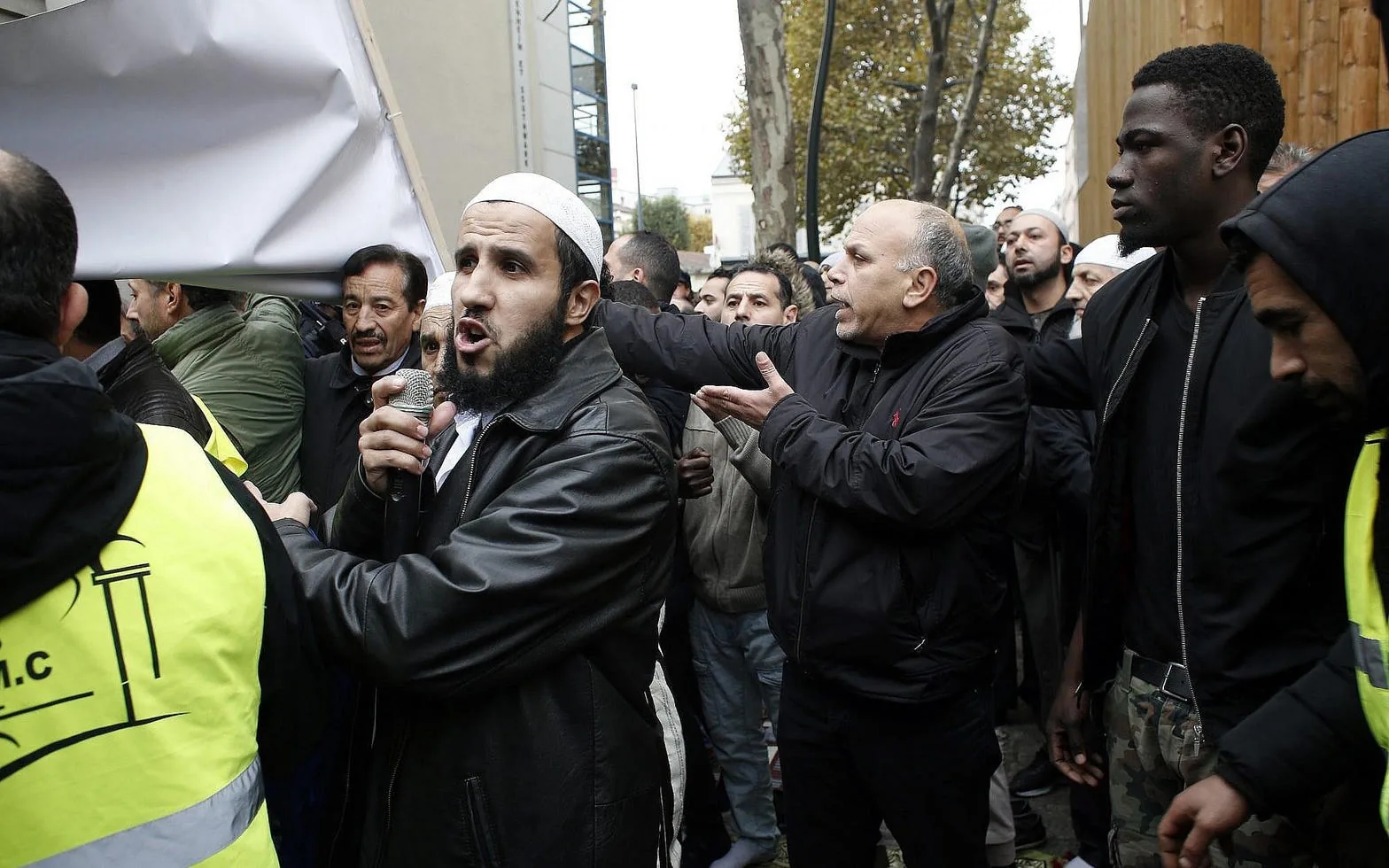
Seen in Drummondville.
One image sometimes succeeds where twenty editorials fail. Not a manifesto. Not a theory. A fact, in a Quebec town, in the middle of ordinary life.
We are told again and again that nothing is changing, that the disquiet is an invention, that naming what we see is a form of bad faith. And yet, in the streets, the schools, the hospitals and the parks, the scenery is changing faster than the official account of it.
The question we are no longer allowed to ask
Do you still deny the Islamisation after this?
The question is not theological. It is political. It concerns the capacity of a people to remain at home, to pass on its language, its customs, equality between women and men, and the secularism Quebec fought for.
When a fact becomes unmentionable, the fact is no longer the problem: the problem is the regime of speech built around it. That is already a form of totalitarianism — reality is no longer discussed, and whoever describes it is punished.
Quebec is not a laboratory
We were told for a long time that the Quebec model would protect us. A common language, a common school, secularism. Those tools exist. What remains is the nerve to use them, and to stop treating the simplest reflex in the world as something shameful: wanting to remain oneself.
Drummondville is not an "isolated case". That is precisely why the image matters. What takes hold far from the city centres, far from the television studios, always ends up reaching the kitchen table. Islamisation does not begin in Montreal and stop at the bridges. It advances through the mid-sized towns, the schools, the menus, the requests for accommodation — and then through the silence.
I am not asking anyone to hate. I am asking that we look. And that a free Quebec finally have the right to say no.
Let us bring back common sense.