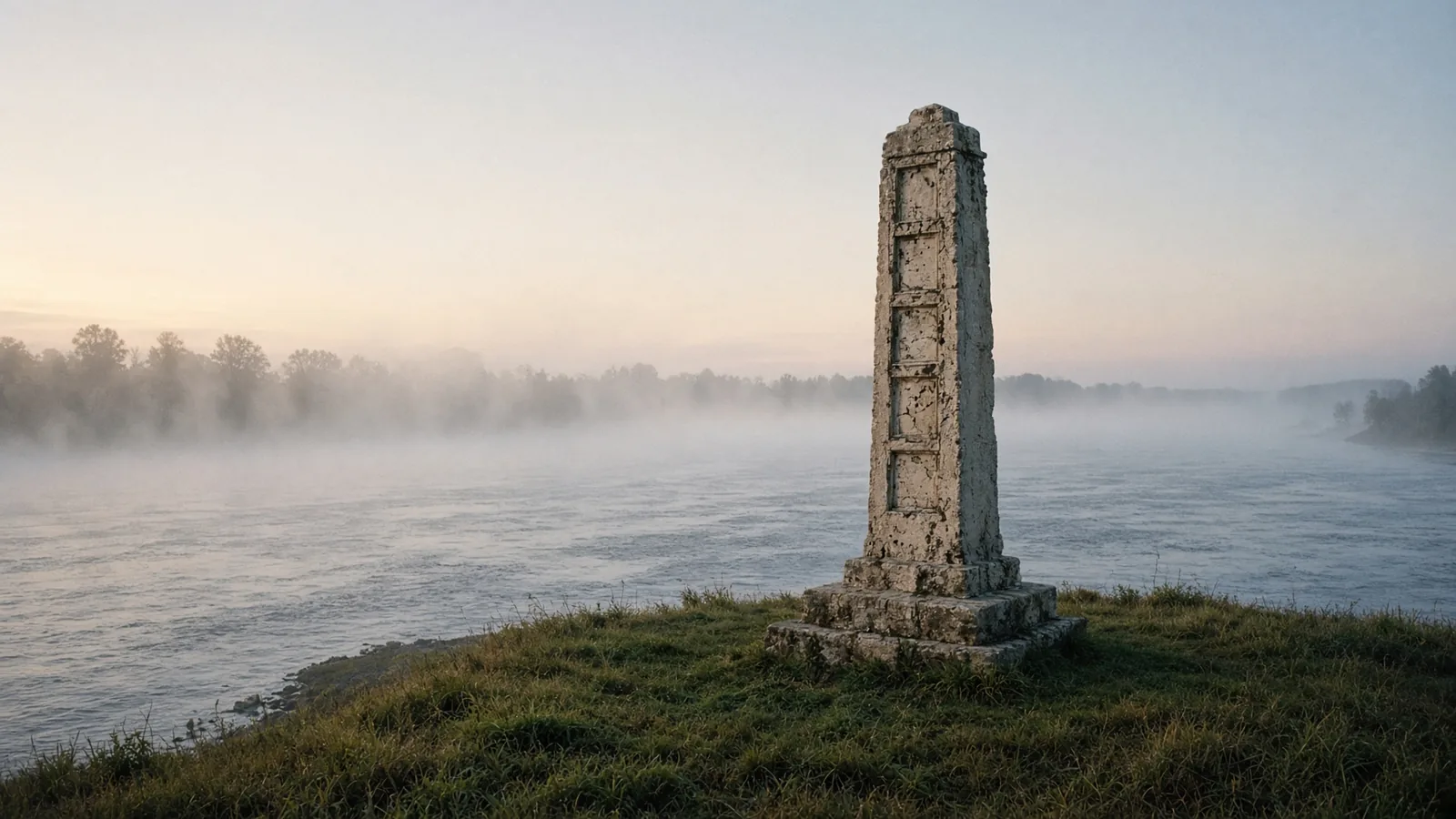
At Carillon, on the bank of the Ottawa River, a stele still stands. It marks the exact place where, in May 1660, Dollard des Ormeaux and his companions fell trying to halt an Iroquois expedition that threatened the colony’s very survival. This is not a myth. It is a documented historical fact, a founding episode of New France — and therefore of us.
The monument commemorating that event was unveiled in 1919 at the urging of Lionel Groulx. For decades it carried bronze reliefs that gave a face to the men who fell here. Those bronzes have vanished. Stolen, by all appearances. What remains is a bare stele, stripped, exposed to weather and indifference. The contrast between the historical weight of the place and the present state of the monument is striking.
A memory set aside
This is not an isolated case. For several decades Quebec’s collective memory has been under constant pressure. The Canadian federal frame, built around multiculturalism, has gradually relegated the specific history of French Canadians — our history — to one story among others. In that logic, the historical markers of the Quebec people — monuments, figures, founding narratives — become secondary, even embarrassing. They no longer sit in a national continuity, but in a mosaic in which no original culture is supposed to come first.
The result is tangible. Places of memory decay without the competent authorities appearing to mind. School programmes give less and less room to the history of New France and to the sacrifices that allowed a Quebec society to survive in America. Symbols that recall a distinct identity are often left to rot, or contested in the name of a contemporary sensibility that prefers other stories.
A majority, and yet secondary
In that setting the Quebec people occupy a peculiar position: a majority on their own territory, yet gradually marginalised in the official story of the country to which they were attached. English Canada, dominant demographically, economically and institutionally, never made preserving our memory a priority. Multicultural policies, by multiplying symbolic recognitions, had the collateral effect of slowly erasing what made Quebec historically singular.
Leaving the Carillon monument as it is is therefore not merely a matter of local neglect. It reflects a broader attitude: that of a Canada that does not need to remember that our people died here so that others could live here. When a people accepts that its places of memory fall into waste, it accepts that its history loses its value.
An act of dignity
Restoring this monument, recovering the missing bronzes and protecting them is not an act of nostalgia. It is the minimum dignity. It is refusing to let a people’s memory be treated as an awkward relic in a country that prefers to speak of diversity rather than of continuity.
As long as Quebecers keep coming to Carillon and refusing oblivion, this place will remain alive. It will remain so only if we stop accepting, as fate, that our history be set aside.
Long live free Quebec.
Let us bring back common sense.